Children need coherence in the models/tools they meet, ensuring new models enhance their learning and understanding, as well as being developmental as they meet further mathematical content. The models are a key part of foundational knowledge, which all children need to understand securely, with the ability to visualise a scenario and manipulate it mentally being key. A consistent development of models, avoiding tricks and algorithms are needed if equity for children is to be achieved, especially for those with additional needs.
Every representation used creates the potential for a different and deeper understanding, but also for further misunderstandings or misconceptions. As such, as with mathematical concepts and contents, carefully scaffolded learning sequences should be developed for representations and the rationale and justification for choice of representation must be clear to children.
North, Dalby, Wake – Primary Maths Autumn 2020
I have identified two key devices and have exemplified their importance in a curriculum demonstrating continuity and coherence.
Array
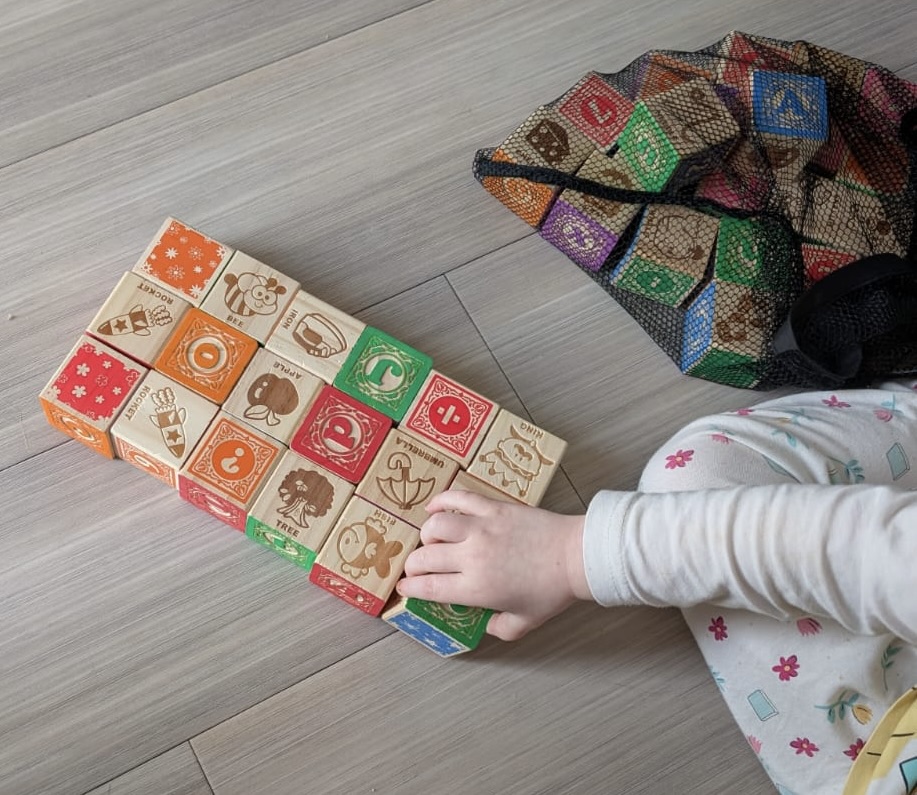
Children as young as 3 or under innately arrange blocks in an array without being instructed – exemplifying how the innate concept develops cohesively to the use as a mathematical array.
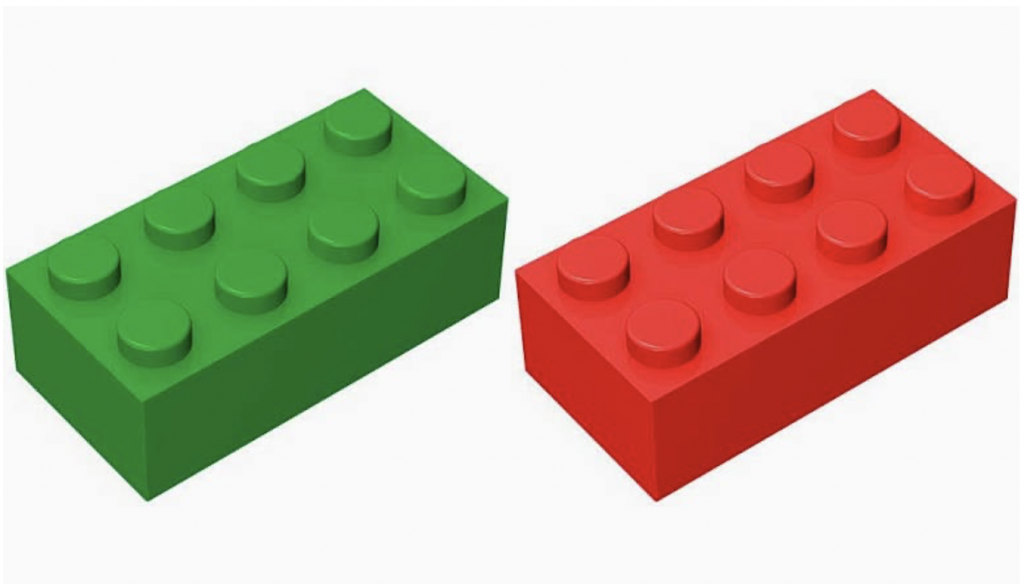
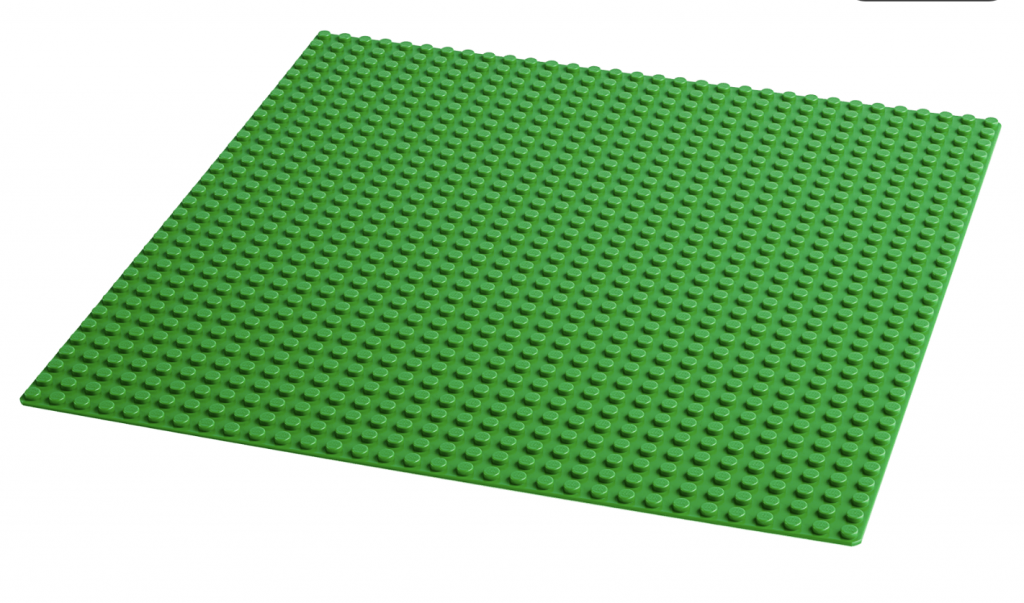
Children often play with Lego bricks which in themselves exhibit an array of stubs/bumps, with children seeking another brick with a similar array of stubs to join one brick onto another. With the Lego base board being an array itself.
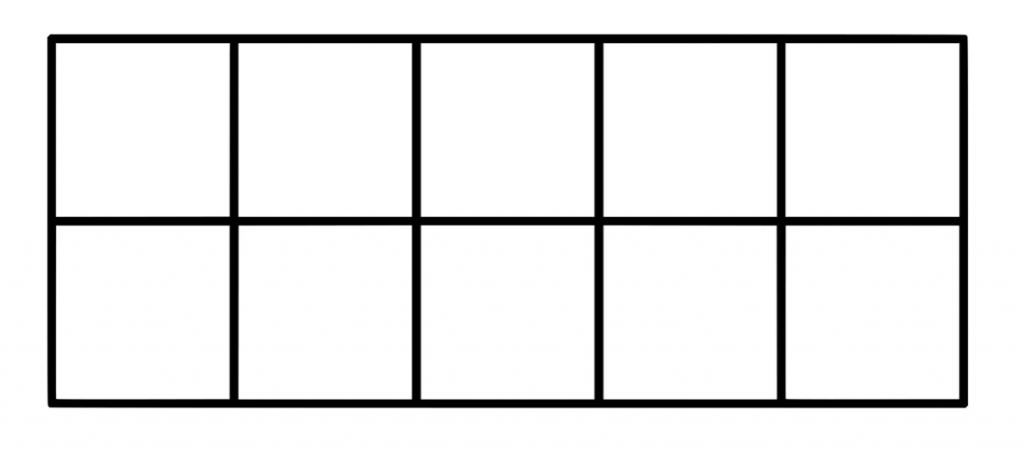
The tens frame used for number is itself an array, 2 rows and 5 columns, and cohesively links to the linear 10’s Dienes blocks.
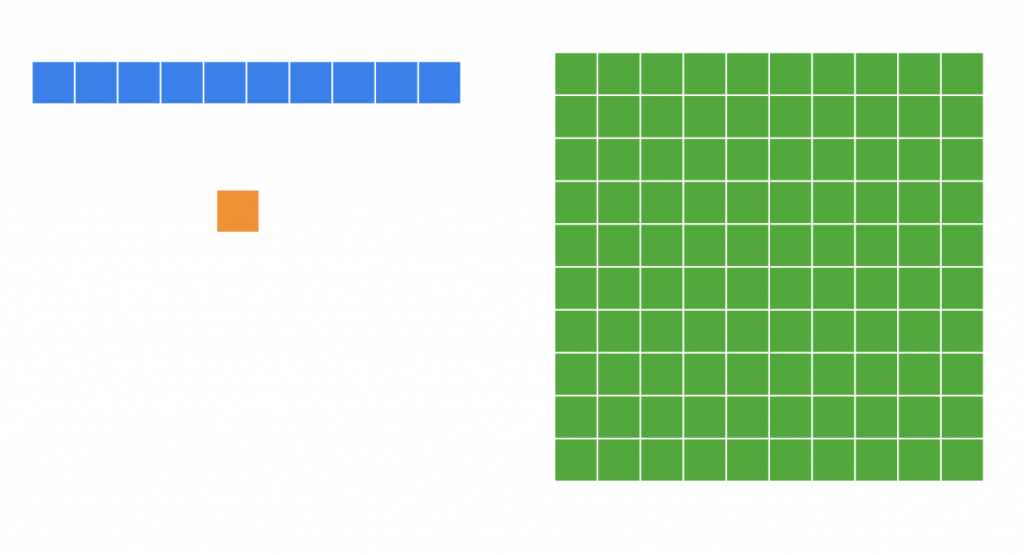
The linearity approach in the Japanese curriculum connects with the repeated linearity in the Array.
It is important for children to appreciate that when making different arrays of a number of dots/objects, the amount of dots/objects must be recognised as consistent for the multiplicative element and factors to be appreciated. Dynamic technology allows children to see the same 12 tiles in this example being arranged in different rectangular formats and in doing so the children can describe the dimensions of the rectangle which will contain 12 square tiles.
Similarly children can appreciate a non-rectangular arrangement and supporting their understanding of the structure of the number.
Multiplicative relationships, division and factors are structurally modelled using the array. An array model being a rectangular arrangement of discrete dots organised in rows and columns, being a visual tool that can be used to demonstrate how the arrangement can be split. The array is a precursor to the rectangular area model and ultimately to a rectangle with potentially continuous measurement – an example of coherence and continuity.
The array is the structure for the distributive law. The array may be partitioned in variety of positions. The distributive law is a key understanding for children as they consider variation and development of general forms for algebra.
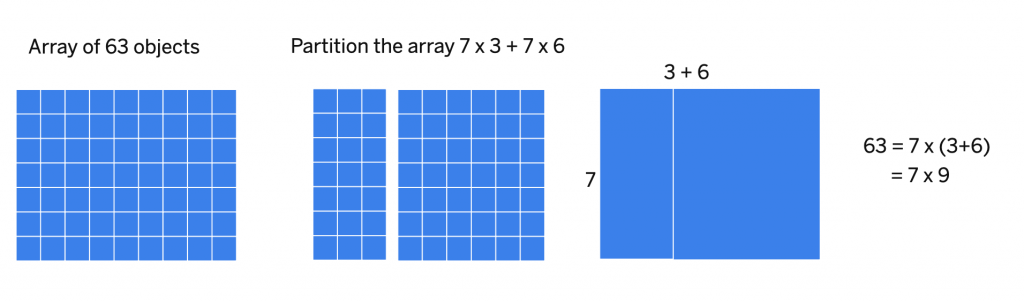
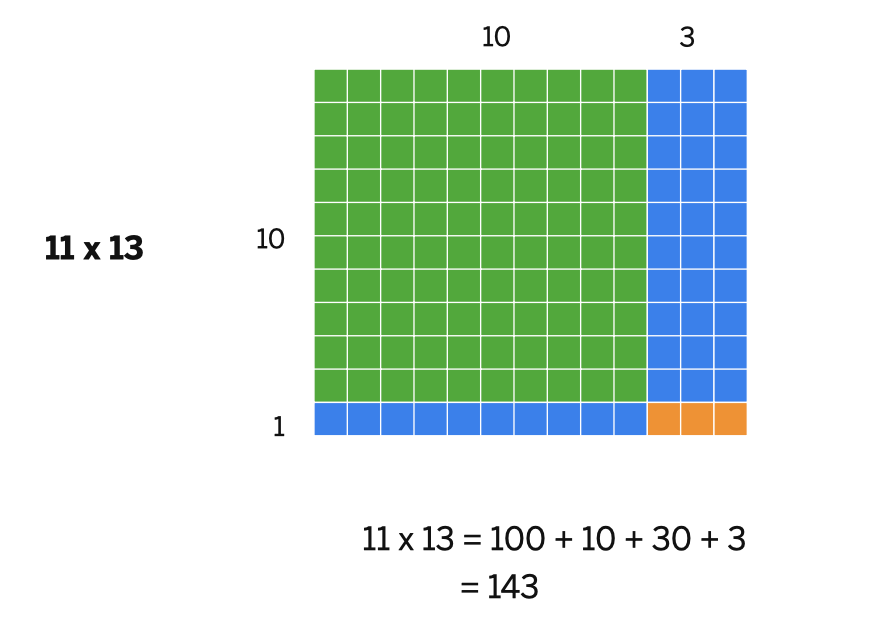
The array is further developed using Dienes resources for multiplication.
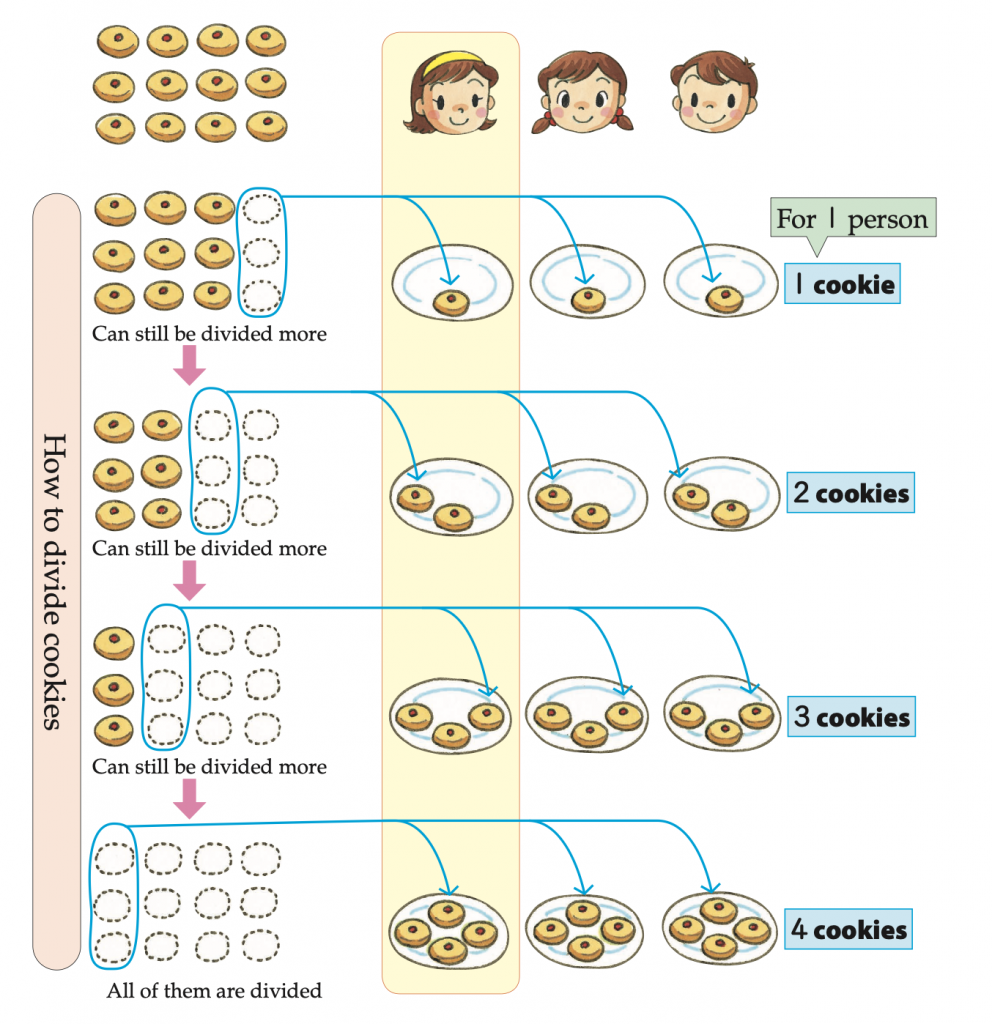
And for division the array evidences the structure for the sharing model leading to the area model.
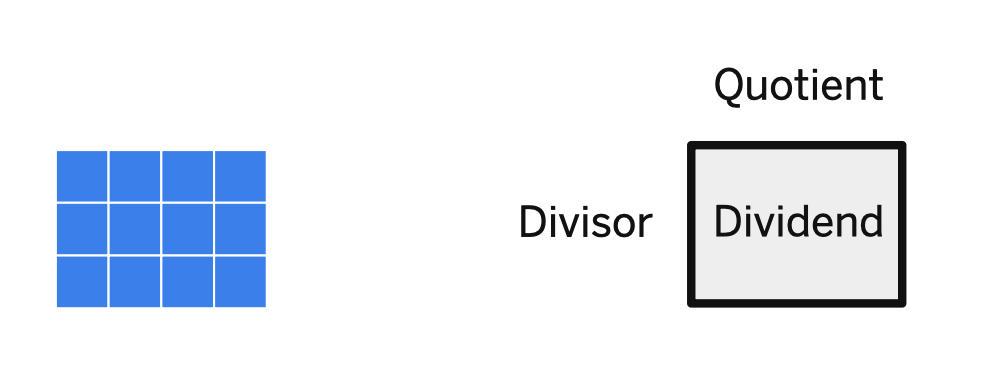
The introduction of the Tape model as a scalar/multiplier allows children to move from the array to work with the numeric values but the scalar/multiplicative principle is the same whatever the dimensions of the array – the representation as seen below is an example of how the connection and linearity is enhanced – the Japanese call them tape diagrams. The tape model is the linear model preceding work with the number line.
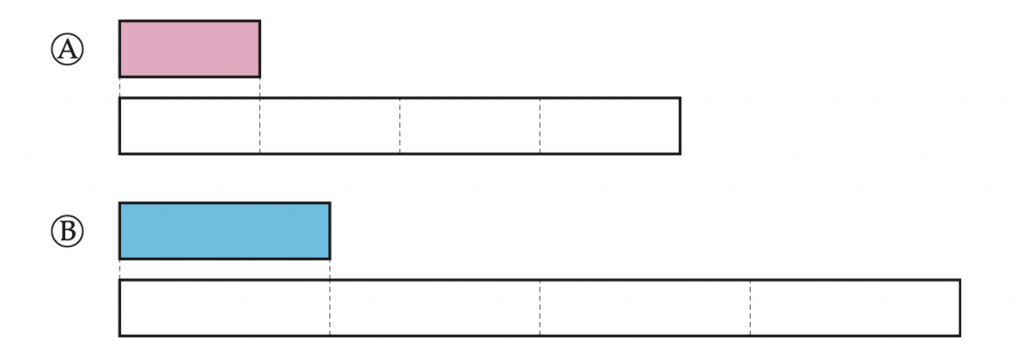
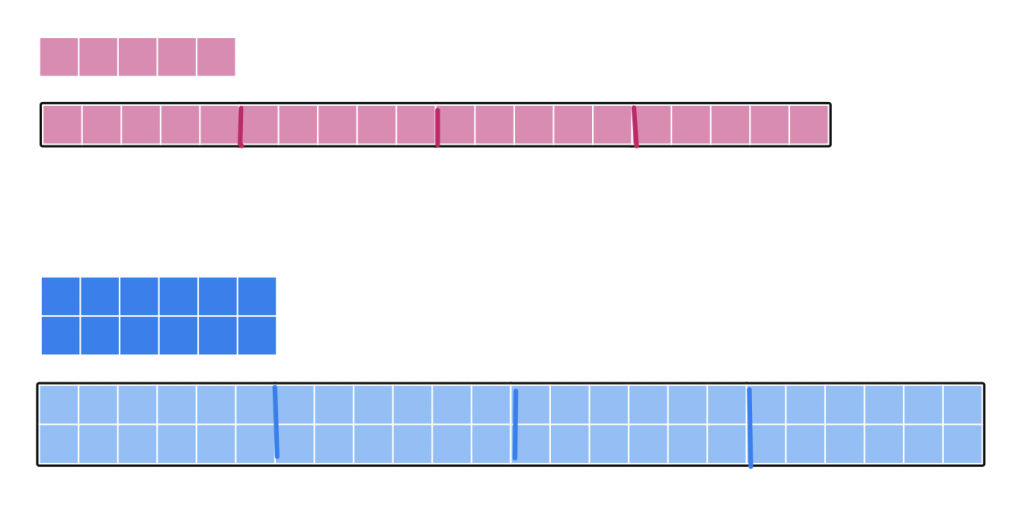
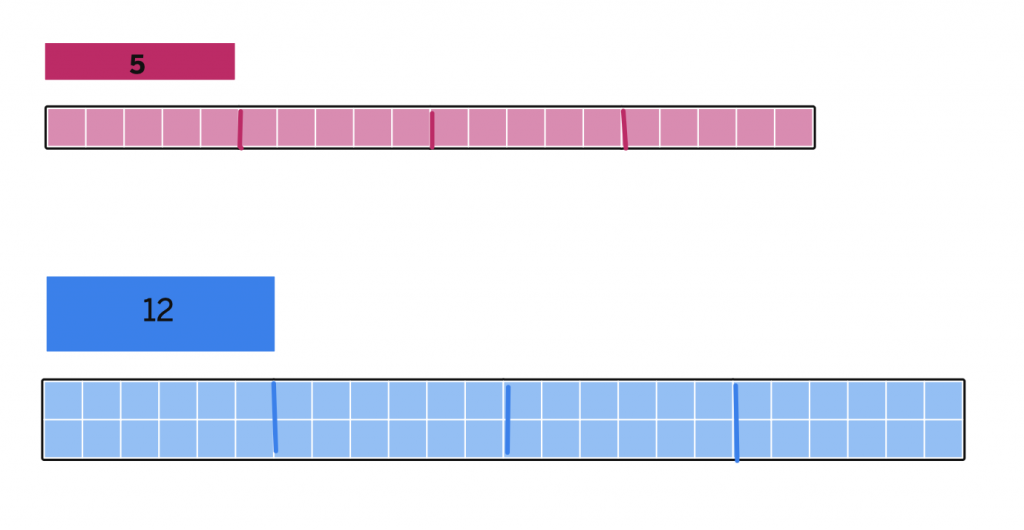
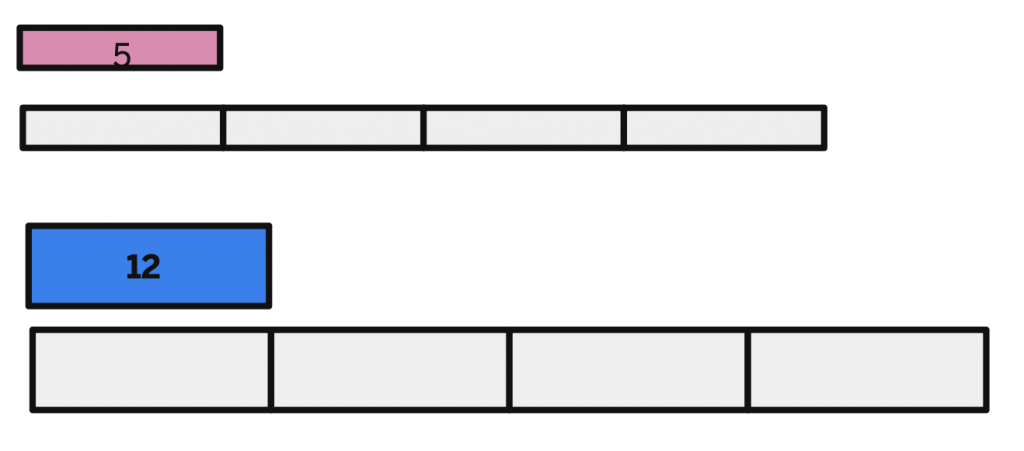
Factors are often thought of as an abstract piece of mathematics, with children often confusing factors and multiples. However, when a visual is recognised/recalled it helps children make connections in the mathematics. The connections give children the confidence and fluency to use the mathematics in a variety of circumstances, problem solving including real life situations e.g. packaging, time management, design, music, scheduling.
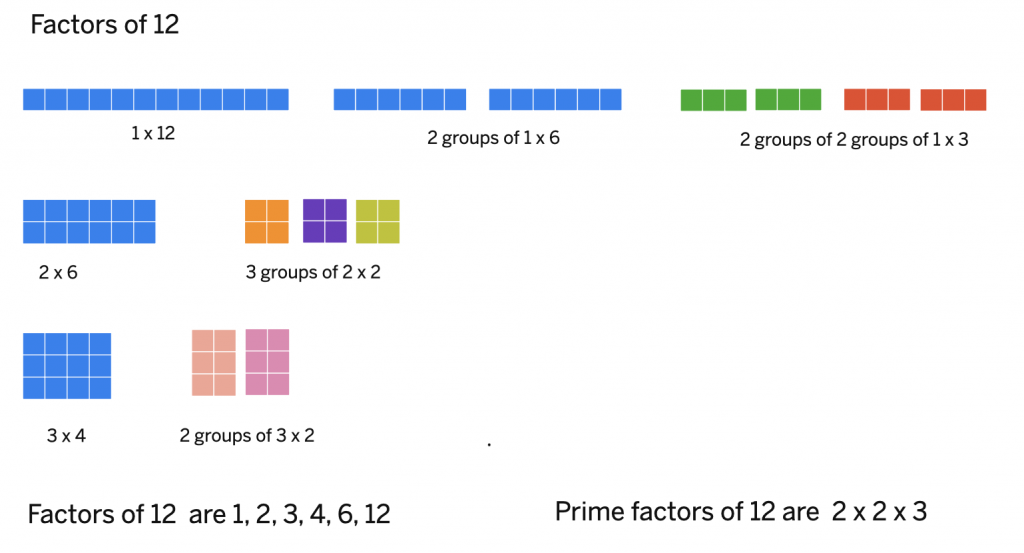
From the array the dimensions of the rectangle are the factors and the number of items in the array is the outcome of the multiplicative relationship of the factors. Thus for an array of 12 tiles, rectangles with dimensions 1 x 12 , 2 x 6 and 3 x 4 provide the factors of 12 being 1,2,3,4,6 and 12.
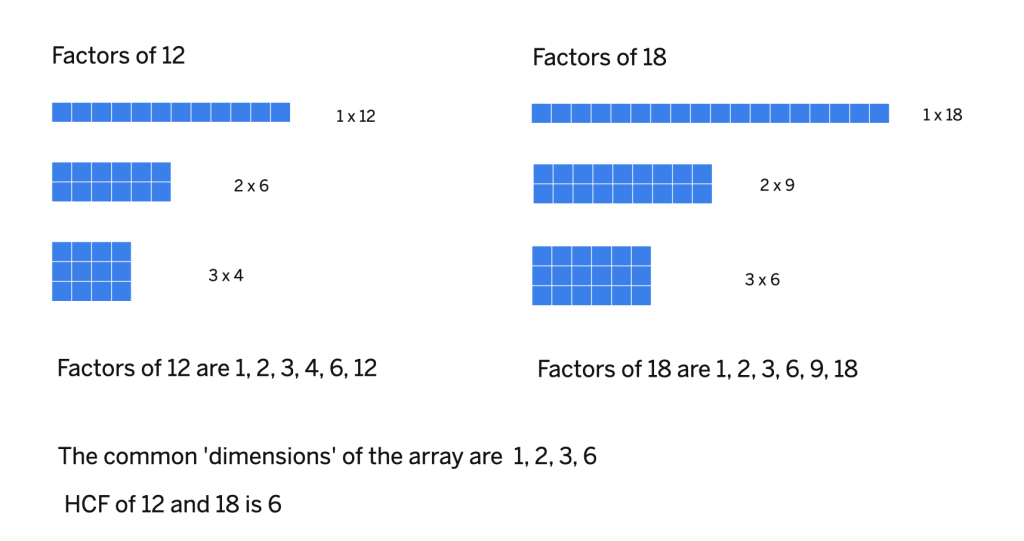
And comparison of arrays of a different number of items leads to the visual supporting a meaningful identification of the Common factors and the Highest common factor.
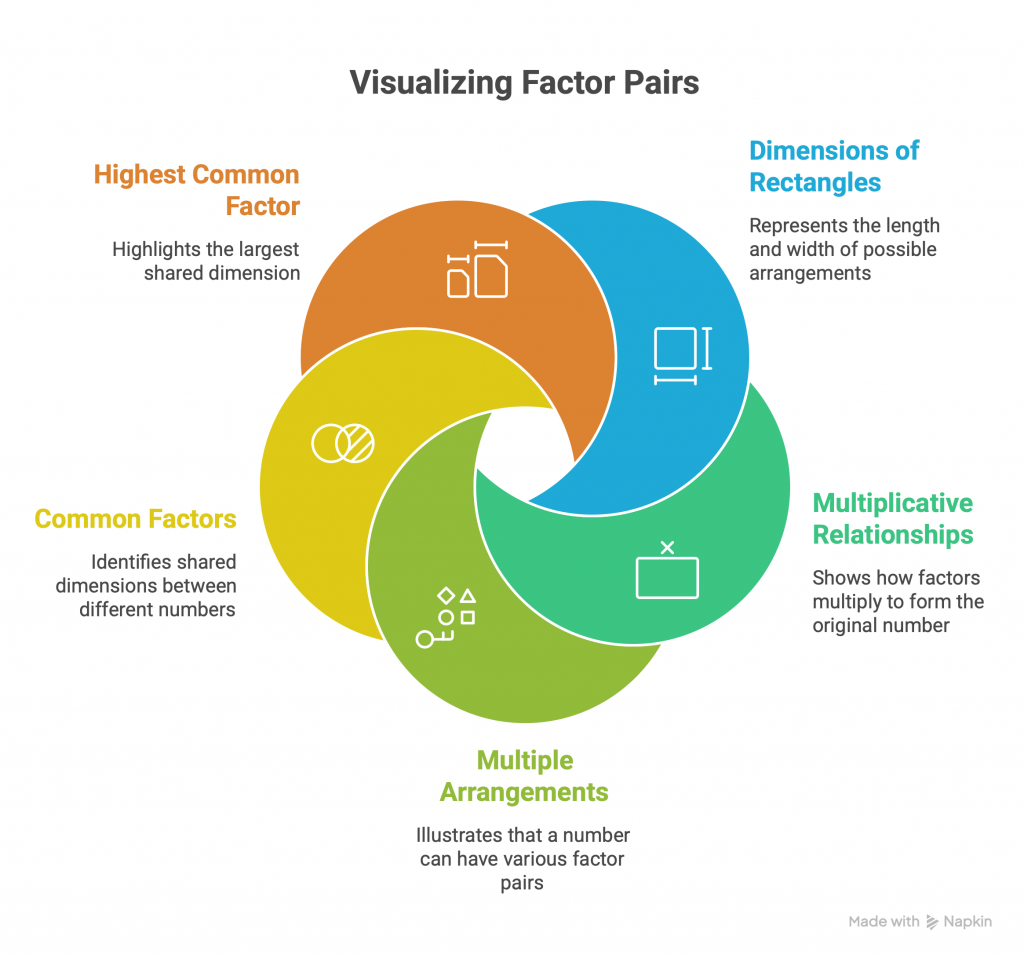
Representations and visual models help us to ‘concretise’ complex and abstract ideas. They provide hooks on which to pin understanding, support recall by providing memorable cues, and reduce load on working memory by providing succinct and systematic summaries of information and relationships
North, Dalby, Wake – Primary Maths Summer 2021
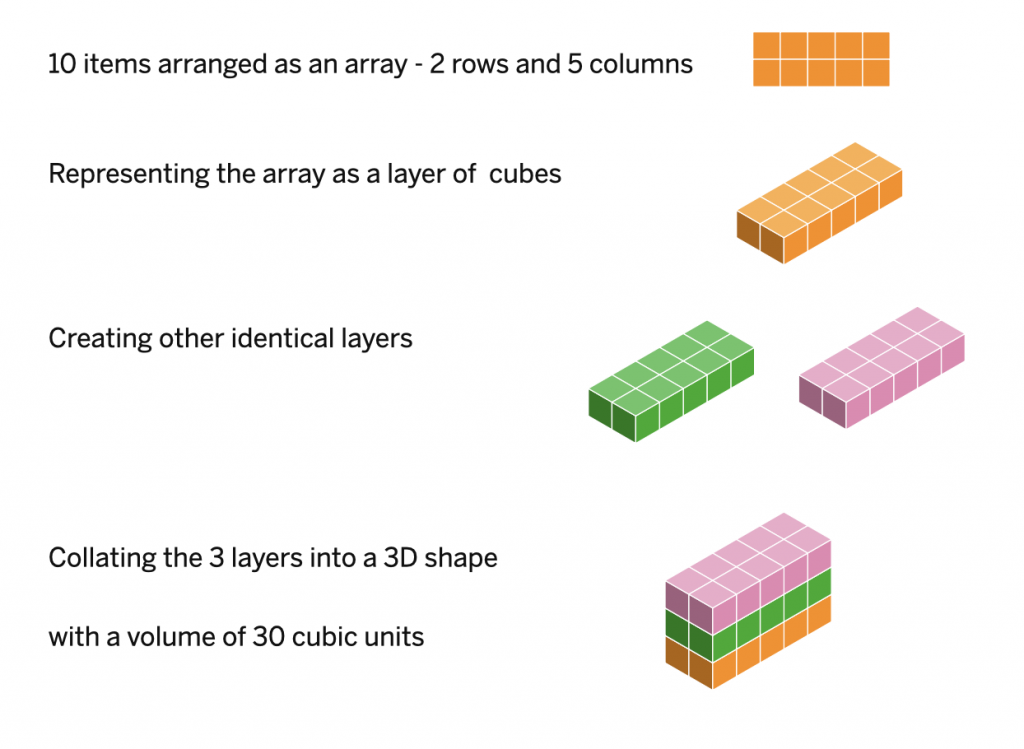
Items arranged in an array can be defined as a layer when considering 3D rectangular prism shapes. Each additional layer is creating the 3D model and the children can count the items in the array layers.
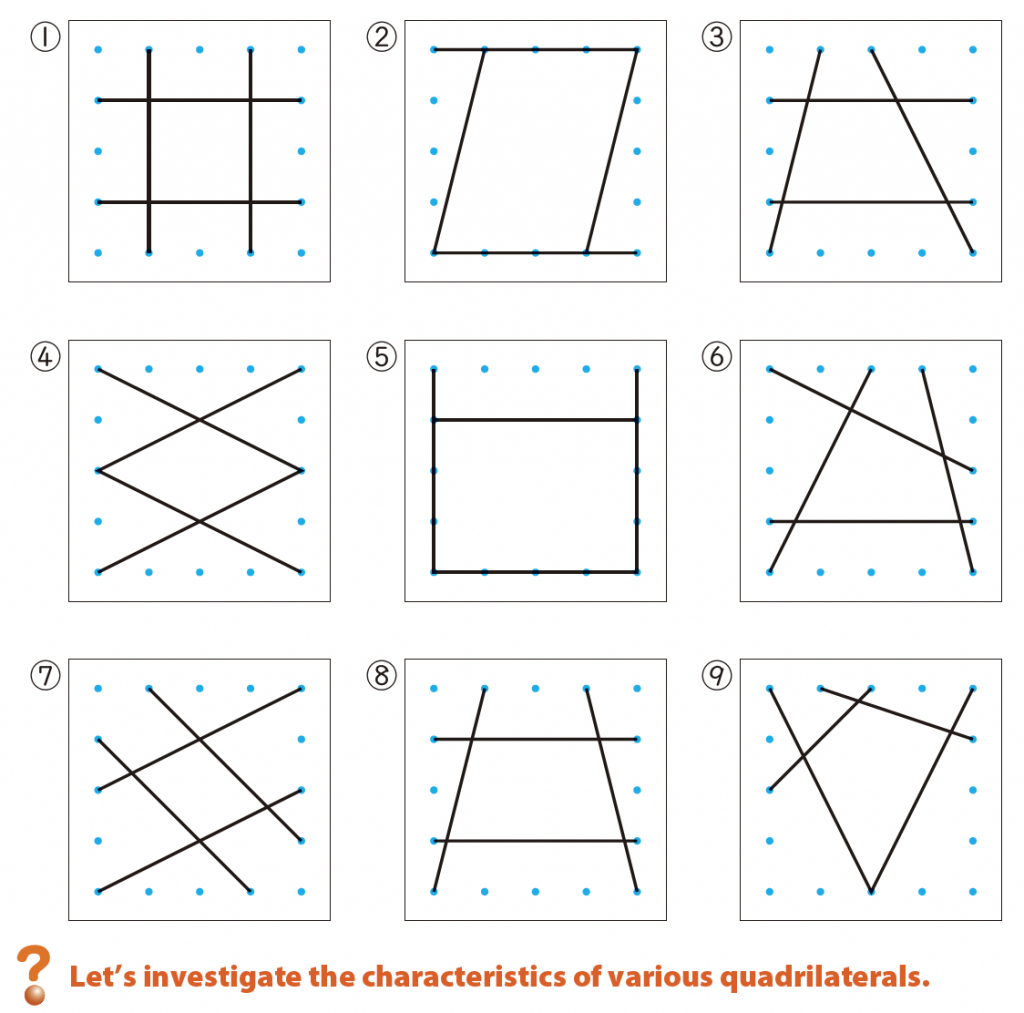
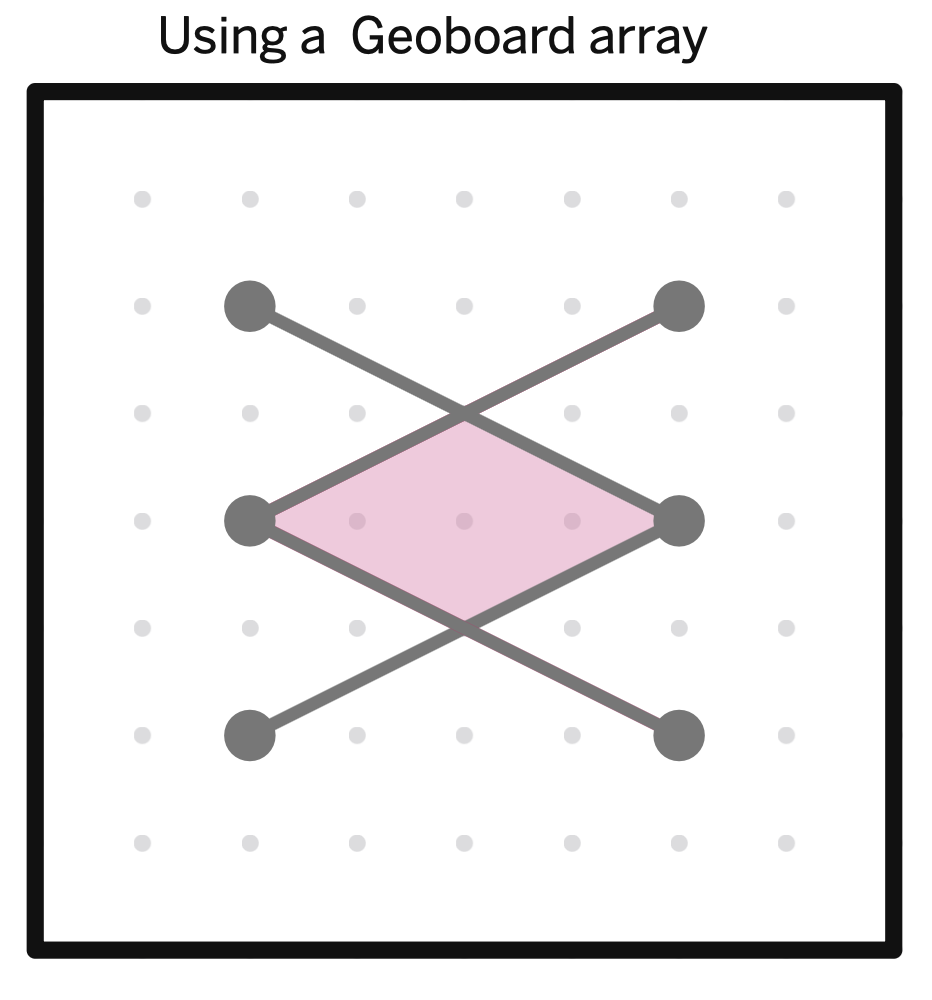
The Geoboard physical resource is an array of ‘pins’ used to develop children’s spatial awareness when using rubber bands to connect pins and make shapes. Using the Geoboard’s array can support identifying shapes based on the space taken up, relative positioning of lines, slope and the movement from one position to another – a precursor to translation vectors
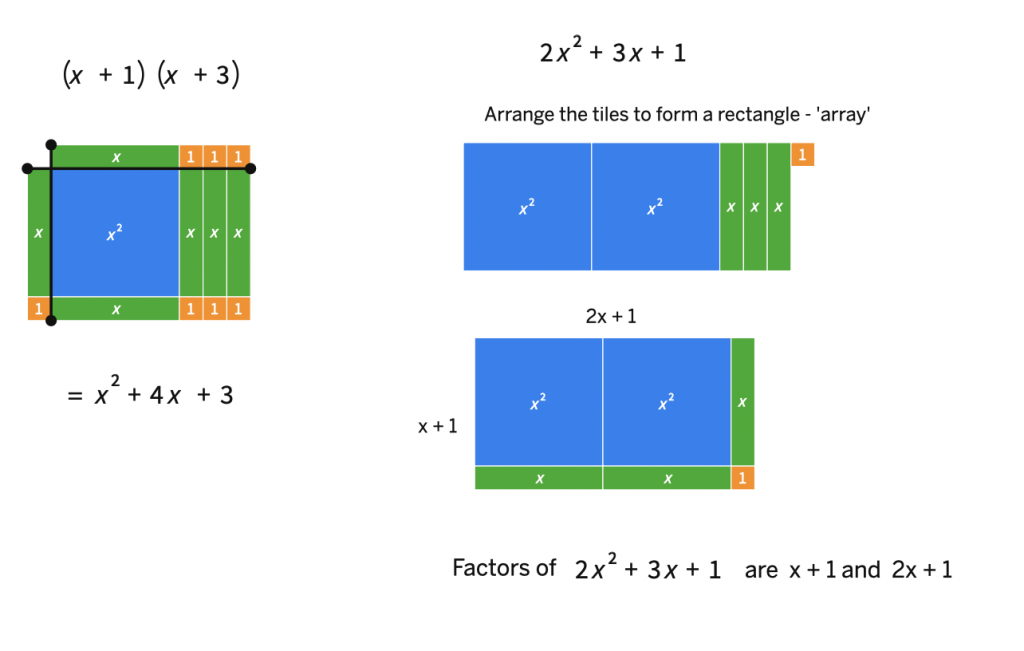
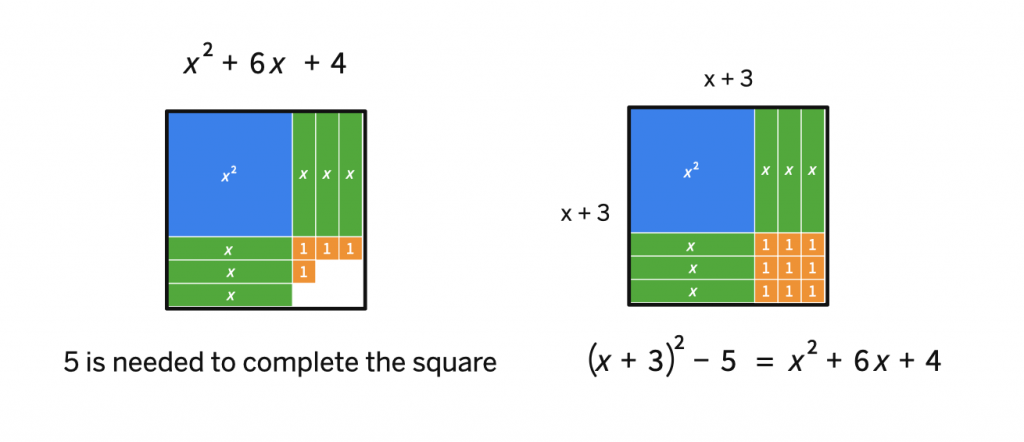
The array is the foundational structure for the area model which in turn can be further developed in algebraic manipulation using algebra tiles. Here with the expansion of brackets and also finding the factors of an expression.
and completing the square with a visual, essential for appreciating the structure.
Linearity and the Number Line
Below are examples for consideration when developing a mathematics curriculum and sequencing in planning.
Linearity is key in the Japanese Curriculum – Grade 1 (Y2 in UK)
- addition (aggregation and augmentation)
- subtraction (take away – reduction and difference model)
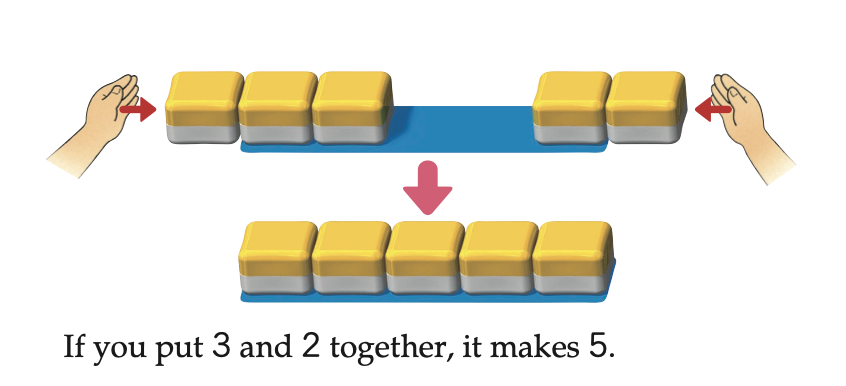
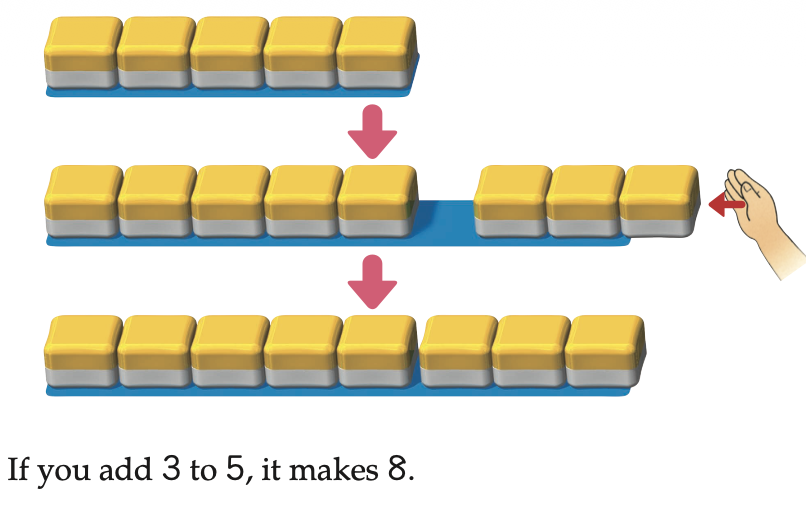
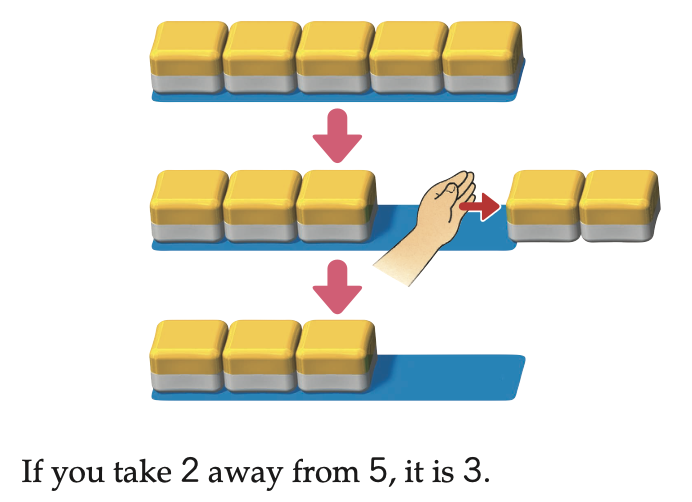
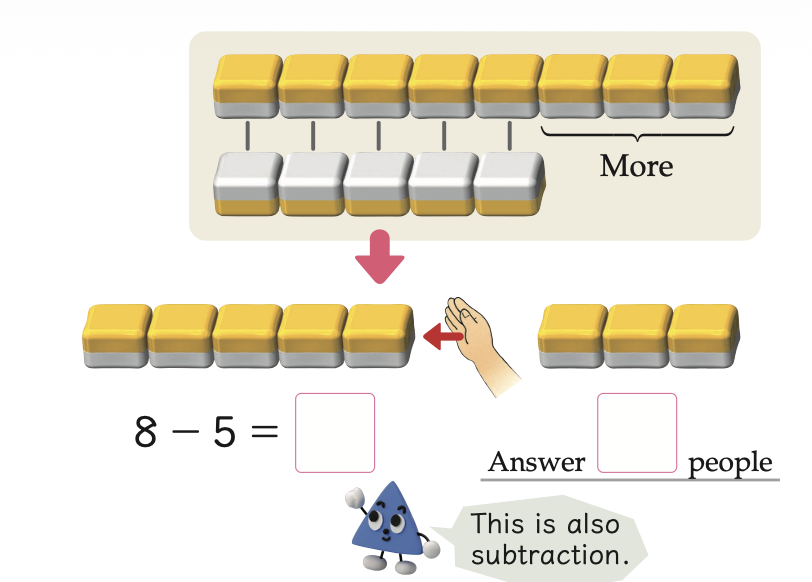
Illustrating the physical gestures, is attracting and directing the children’s attention and aiding their recall of information (see Royal Society publication). Animated PPT slides rarely if ever include the hand movements indicating the gesture. Notice also that proportionality is maintained with the linear model.
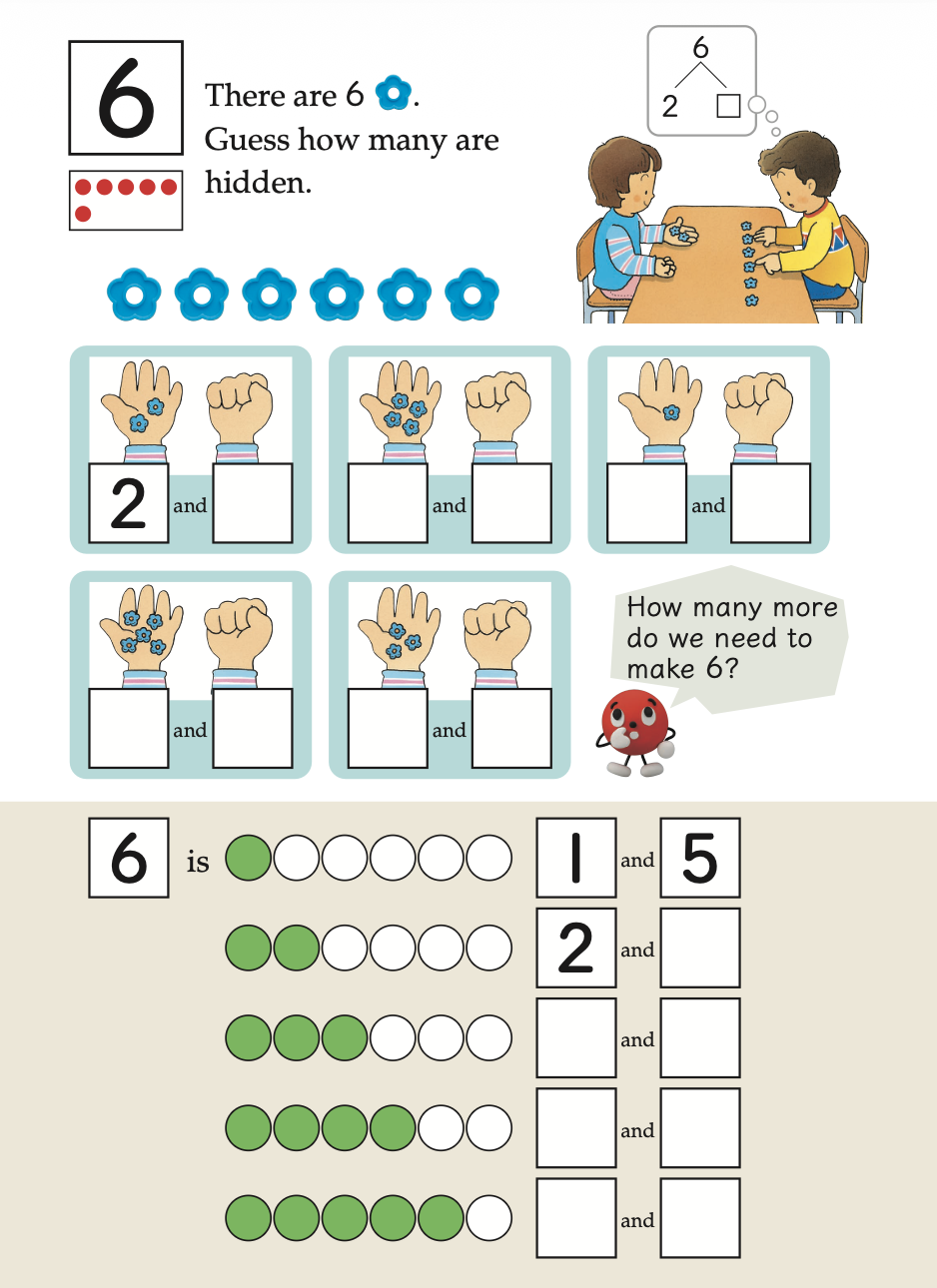
A practical example leading to the linear model for the whole and its parts is shown below, where the same linear model can used when there are more than 2 parts. Notice ‘thought bubbles’ are exactly that – explaining the child’s thinking, in the case below the child knows there are 6 flowers/counters in total but he can only see 2 being held in one hand by his partner. Therefore his thought is open to a variety of approaches, each valid and part of his developing a variation to aid further tasks i.e. ‘how many more than 2 is 6?’ or ‘what must I add to 2 to make 6?’ or ‘what is 6 take away 2?’ or something similar. We want to hear children’s thinking as they work.
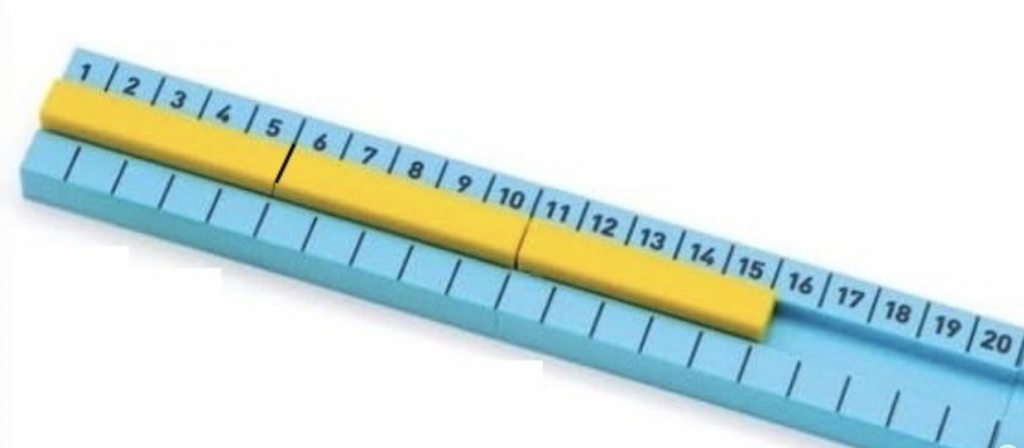
Cuisenaire rods are a supurb physical model to support the connection of the number track to the number line. With children making ‘trains’ of rods with the value/length of each train identifiable if placed on the number track. However the value assigned to the Cuisenaire rod can overtime be developed to be a variable, and children can work on a blank number line. This is the development of the tape diagram in the Japanese curriculum.
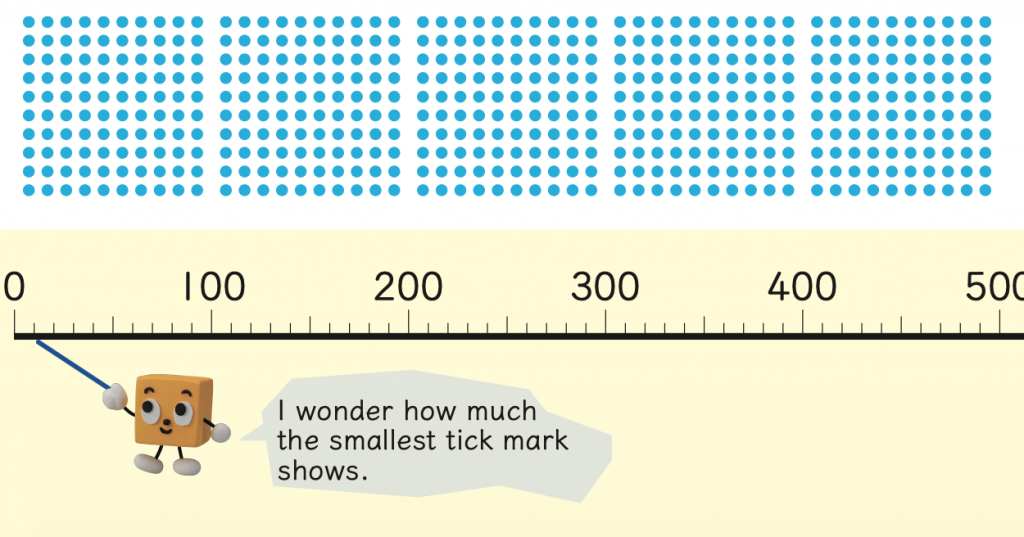
A number line is a straight, horizontal line representing numbers in sequential order, typically with evenly spaced tick marks. It serves as a visual tool for understanding numerical order, ordering integers/fractions/decimals, and performing arithmetic (counting, addition, subtraction). See below the array linking to the number line.
Below are more examples in context of the number line as a didactical device:
Time; The number line is a more coherent model when working with time as the continuity of the line is more obvious to children than working with a circular analogue clock.
Statistics; including where the number line is key for finding the range of a pair of numbers.
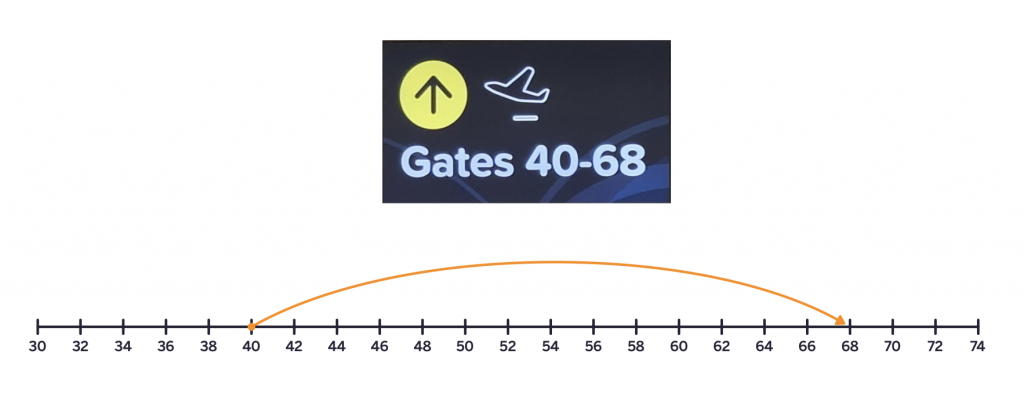
Negative numbers; The introduction of the vector model for negative numbers is coherent as a precursor to formal vectors introduced at a later stage. Children appreciate the movement of magnitude and direction, with combination of vectors being a natural progression.
Ratio and Proportionality; using double number lines.
There are many more examples that could be included of where the number line is a key didactical device.
In summary:
Anyone wanting to design a coherent curriculum should include exemplification of key didactical devices such as the number line and array
Models causing misconceptions and mistakes
Cherry diagrams alone for Part, Part, Whole model – intended by NCETM to be used as an animated model, but frequently are not, do not evidence proportionality and are not connected with further mathematical content. The model would be improved if linear. If anything the model causes confusion when children are taught factor trees – another common practice and one not recommended!
Factor Trees and Bugs
Factor Trees or Bug representations don’t provide insight into the mathematical structure of factors instead they provide a procedural method for finding factors.
North, Dalby, Wake – Primary Maths Autumn 2020
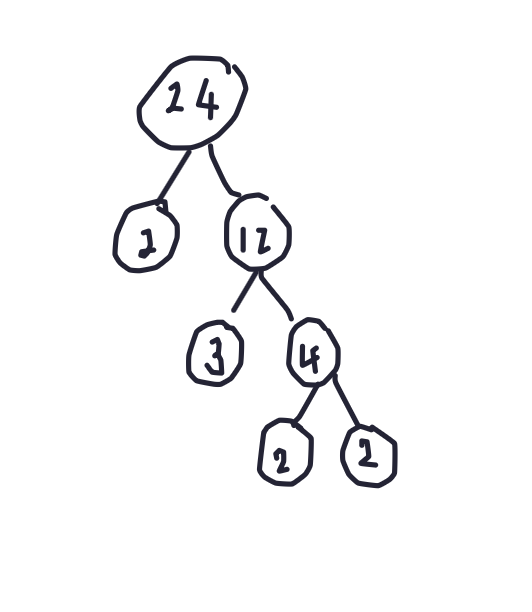
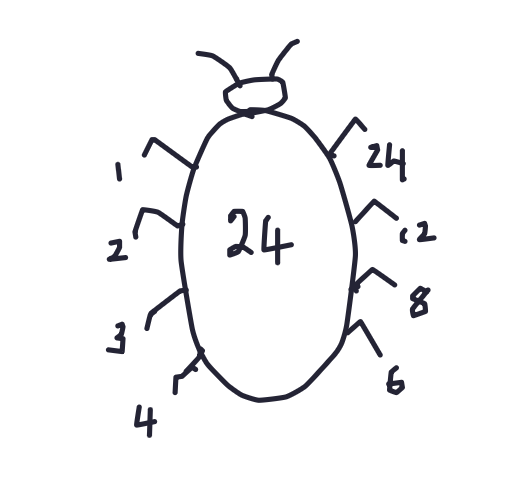
Typically bugs are presented to young children as ladybirds due to being ‘friendly and likable’ insects. The additional confusion created when using this model is ladybirds and most insects have 6 legs, yet the bug in the example had 8 legs! This is yet another example of where the science is not connected with the mathematics.
Factor Triangles where children are shown the triangle to represent multiplication. Does the largest number have to be at the top? What link does it have with the structure of multiplication? Multiplication connects with an array and area model!
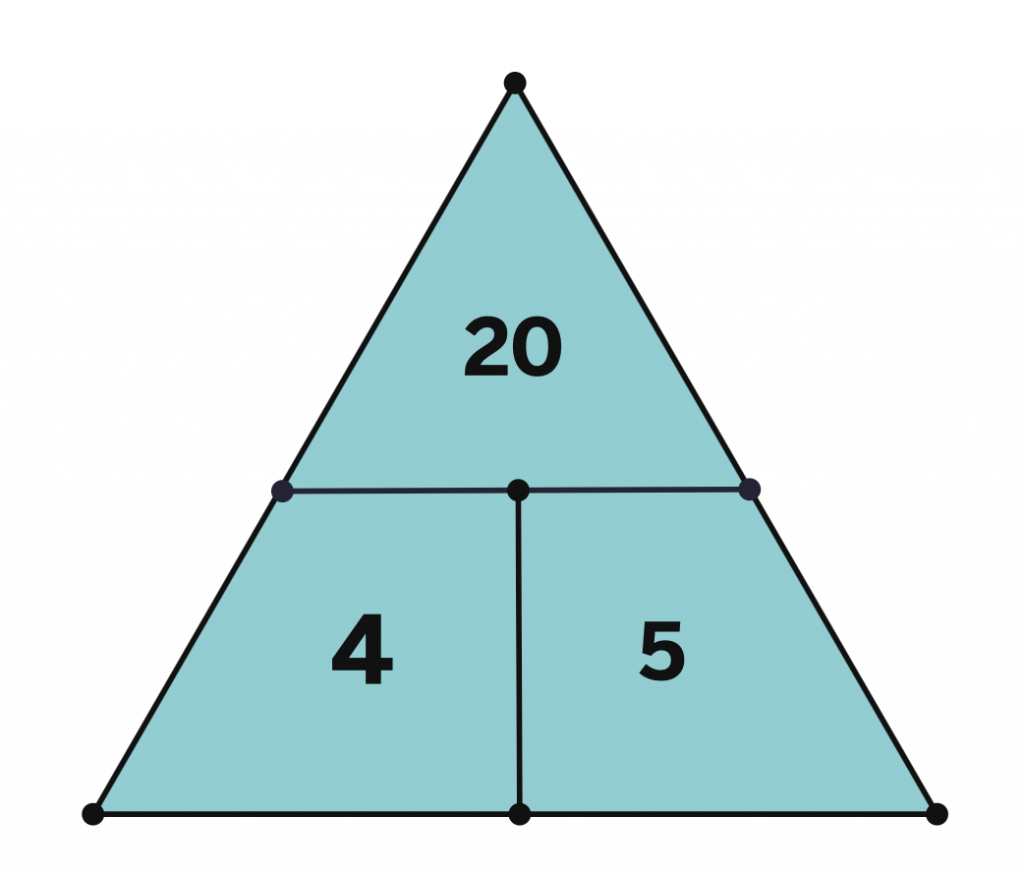
Speed Distance Time Triangles where children are taught the mnemonic in the diagram below. However evidence shows children frequently do not remember to put the letters in the correct position and therefore the triangle is not usable. Children do not have the understanding that a speed of 20m/s is actually relating the metres travelled in the number of seconds (number of metres ÷ number of seconds) and therefore to recall the units of a measure would be more valuable. The emphasis on units being used is important in the Japanese curriculum. The SDT triangle is something highlighted as needing to avoid in the recent work in T&L of Mathematics and Science by NCETM workgroup leads.
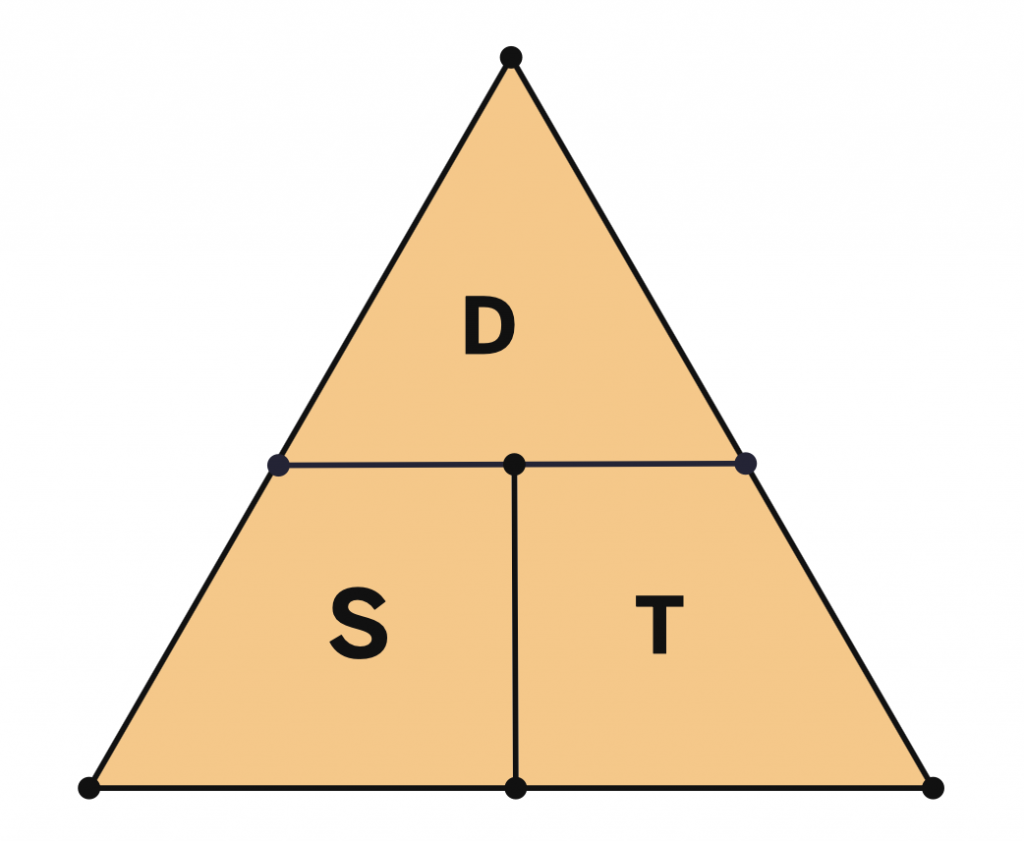
This is not an extensive list of examples to use and those to be discouraged. However the quote below stands as a good summary
Carefully chosen representations accurately reflect the mathematical structure under investigation, supported by familiar contexts that ground engagement with abstract mathematical concepts in familiar experiences, help children develop visual models on which to pin their understanding.
North, Dalby, Wake – Primary Maths Autumn 2020
Leave a Reply